How long is the Investigative Field Interviewing course?
The course is delivered as a one-day intensive on-site at your agency. The single-day format covers the complete framework, legal foundations, communication adaptation, rapport-building, victim engagement, witness interviewing, suspect strategies, and written statements, calibrated for the pace and constraints of patrol work.
Who is this course designed for?
Patrol officers (rookies building foundations and veterans who want structure to match their instincts), Field Training Officers who develop technique in new officers, and supervisors who need to recognize what effective patrol-level interviewing looks like. The course is also valuable for any officer whose first contact often becomes the first interview in an investigation.
Why does patrol need its own interviewing training?
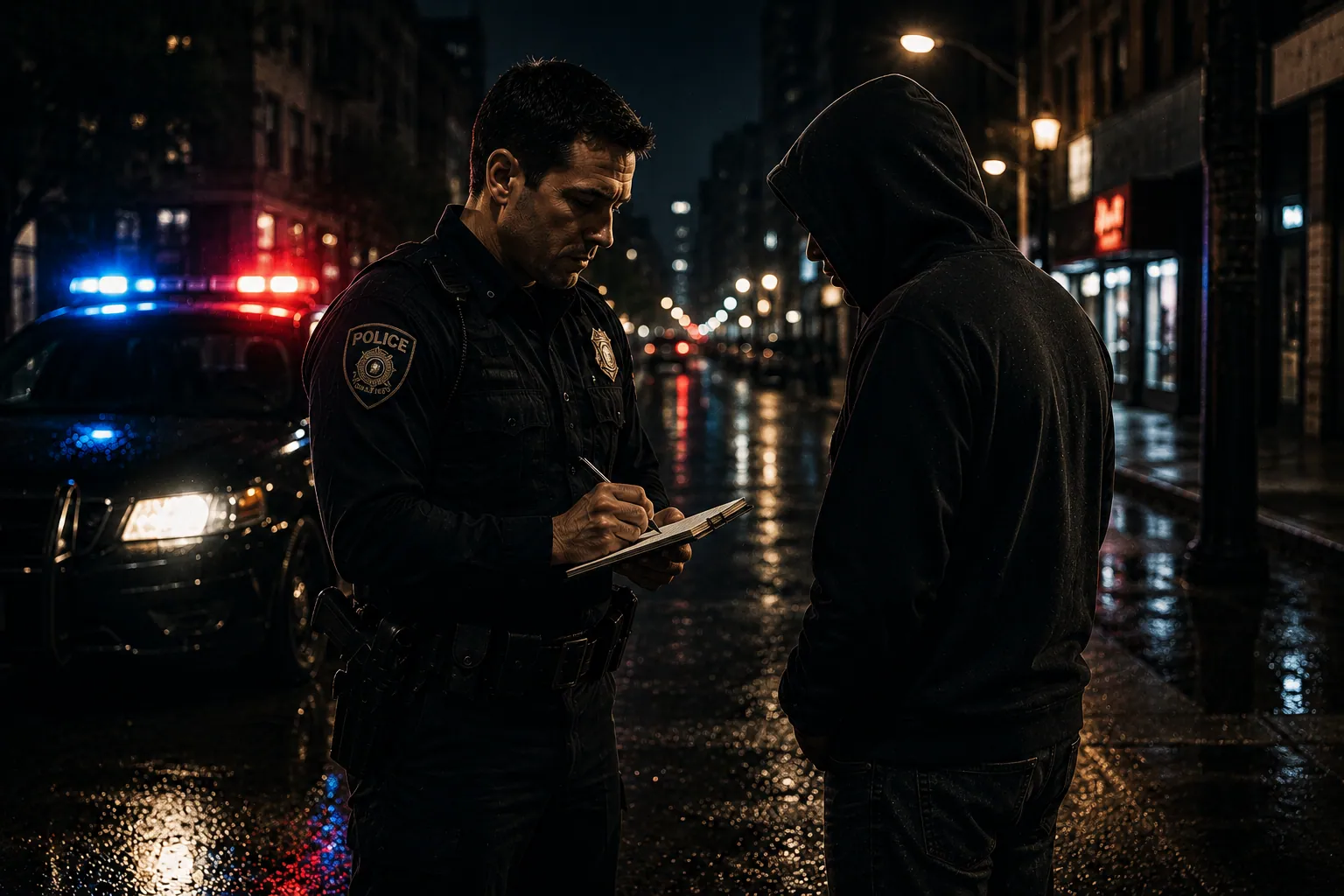
By the time a detective arrives, the patrol officer has already spoken to the victim, the witness, and possibly the suspect. The quality of those first conversations shapes what leads get pursued, what evidence gets preserved, and whether any of it survives a suppression hearing six months later. Most LE training treats interviewing as a detective skill, it isn’t.
What does the course cover that traditional academy training doesn’t?
Field-specific application, not interview-room theory. Working across roadside, residential, commercial, medical, and public settings; maintaining situational awareness during interviews; communication adaptation under time pressure; recognizing trauma in distressed victims at the scene; and capturing written statements that hold up when the case advances. Real-world patrol contexts, not classroom scenarios.
Does this course cover legal limits, voluntary contact, detention, arrest?
Yes. The Constitutional & Legal Requirements module covers constitutional requirements, voluntary contact vs. detention vs. arrest, admissibility standards, and the boundaries that determine whether what officers learn in the field can be used in court. This is foundational, every interview technique taught after that is built within those legal bounds.
How does the course handle interviewing victims at the scene?
Victims in the field are often in acute distress. The course teaches deliberate, empathetic approaches grounded in trauma-informed practice, recognizing how trauma affects disclosure, memory, and cooperation, and building the trust that determines what information surfaces in those critical early stages. Contaminated or incomplete victim accounts at the scene rarely get repaired later.
Does the course teach how to capture written statements in the field?
Yes. The Focus Note-Taking Method captures critical detail without breaking the interview thread, and the course covers how to move from field notes to a written statement that is accurate, complete, and legally defensible when the case goes forward. Patrol-generated statements are frequently the foundation of the entire investigation, they need to be done right the first time.
How do I bring this course to my agency?
The course is delivered on-site at your agency in a one-day format. Contact ASC through the Request Training form or by calling (914) 489-2330 to discuss scheduling and squad/shift logistics. Joe responds personally to scope the engagement.
What does this training cost?
Published rates for every ASC course, including Investigative Field Interviewing, are listed on the pricing page. Final pricing depends on agency size, customization, and location. Joe responds to every inquiry personally and provides an exact quote tailored to your patrol division's specific scope and shift structure.
Do you offer refresher training or follow-up for agencies that have completed the course?
Yes. ASC offers refresher modules for patrol divisions returning a year or more after their initial engagement, advanced specialty modules calibrated for specific patrol environments (rural, suburban, urban high-density, transit, or specialty units), and FTO development consultation that integrates ASC technique into your existing field training program. Many host agencies engage ASC on a recurring basis as new officers cycle through patrol shifts.